
The Infrastructure Foundation That Changed Everything
In 2007, I made a strategic decision that would define our hosting platform for years to come: building our entire VPS infrastructure around Virtuozzo virtualization software. What seemed like a bold bet at the time proved to be prescient as we prepared for our Windows VPS hosting launch.
The release of Virtuozzo 3.5.1 SP1 represented more than just an incremental update—it delivered fundamental capabilities that addressed core challenges in virtualized hosting environments.
Dynamic Storage Management: Efficiency at Scale
The introduction of dynamically increasing disk drives (compact disks) solved a critical resource allocation problem. Previously, allocating 20GB to a client meant consuming 20GB regardless of actual usage. With dynamic allocation:
- Actual usage averaged under 4GB for 20GB allocations
- OS virtualization eliminated duplicate OS copies
- Only ~300MB was required per virtual environment for the OS
- Remaining resources were shared with the host machine
This efficiency gain translated directly to improved margins and resource utilization—a critical consideration for any hosting operation.
Real-Time Memory Management Without Downtime
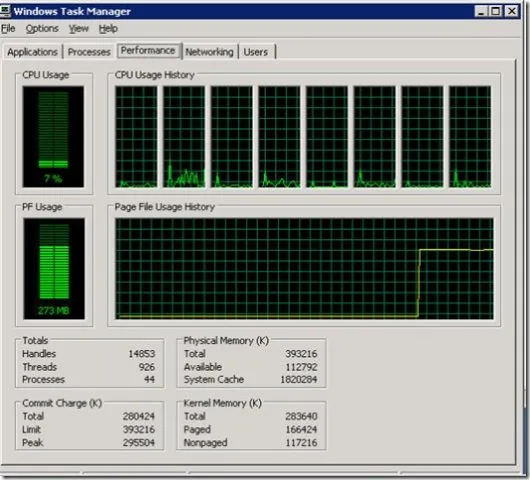
The enhanced memory control capabilities demonstrated Virtuozzo's operational sophistication. During testing on our dual-processor, dual-core Xeon servers with serial attached SCSI drives, we could:
- Adjust memory allocation from unlimited to capped (384MB) in real-time
- Monitor immediate impact on resource utilization
- Achieve zero-downtime memory reallocation
The ability to dynamically adjust resources without service interruption became a competitive differentiator in the hosting market.

Network Connectivity Expansion
SP1 introduced VPN client capabilities within virtual environments—addressing a significant client requirement. The roadmap promised VPN server functionality in Virtuozzo 4.0, indicating the platform's evolution toward enterprise-grade networking features.
CPU Resource Controls
The introduction of strict CPU limits provided granular control over resource allocation:
- Traditional CPU sharing allowed burst capacity to 100% of available CPU
- New limits enabled capping burst capacity (25%, 50%, etc.)
- Prevented single VPS from monopolizing CPU resources
- Enabled tiered service offerings based on burst allowances
Console Independence and Management Tools
Each virtual environment gained its own console, supporting multiple remote management protocols including Terminal Services, Citrix, Radmin, and VNC. This advancement narrowed the operational gap between OS virtualization and hardware virtualization.
The addition of Windows Firewall rule management within VPS environments provided administrators with familiar security controls, though it required careful configuration to prevent lockouts.
Strategic Infrastructure Implications
Looking back, these 2007 innovations laid the groundwork for fundamental shifts in hosting architecture:
- Shared hosting evolution toward containerized environments
- Reseller hosting transformation into managed VPS solutions
- Dedicated hosting replacement with dynamic resource allocation
Why This Historical Perspective Matters Today
The challenges Virtuozzo addressed in 2007—resource efficiency, dynamic allocation, zero-downtime management—remain central to modern cloud infrastructure. Understanding how these foundational technologies evolved provides context for today's containerization and serverless architectures.
The emphasis on operational efficiency and resource optimization that drove our Virtuozzo adoption continues to influence infrastructure decisions across the industry. Whether you're evaluating Kubernetes, Docker, or modern cloud platforms, the core principles established in this era remain relevant.